Keyword Research in 2026: The Complete Guide for Traditional & AI Search

I ran a keyword research audit last month and discovered something surprising: half of my client’s best-performing pages weren’t ranking #1 on Google. They were getting cited by ChatGPT. With 800+ million people now using AI search weekly and Google AI Overviews now appearing in over 50% of searches, the old playbook of “find high-volume keywords and rank for them” misses half the opportunity.
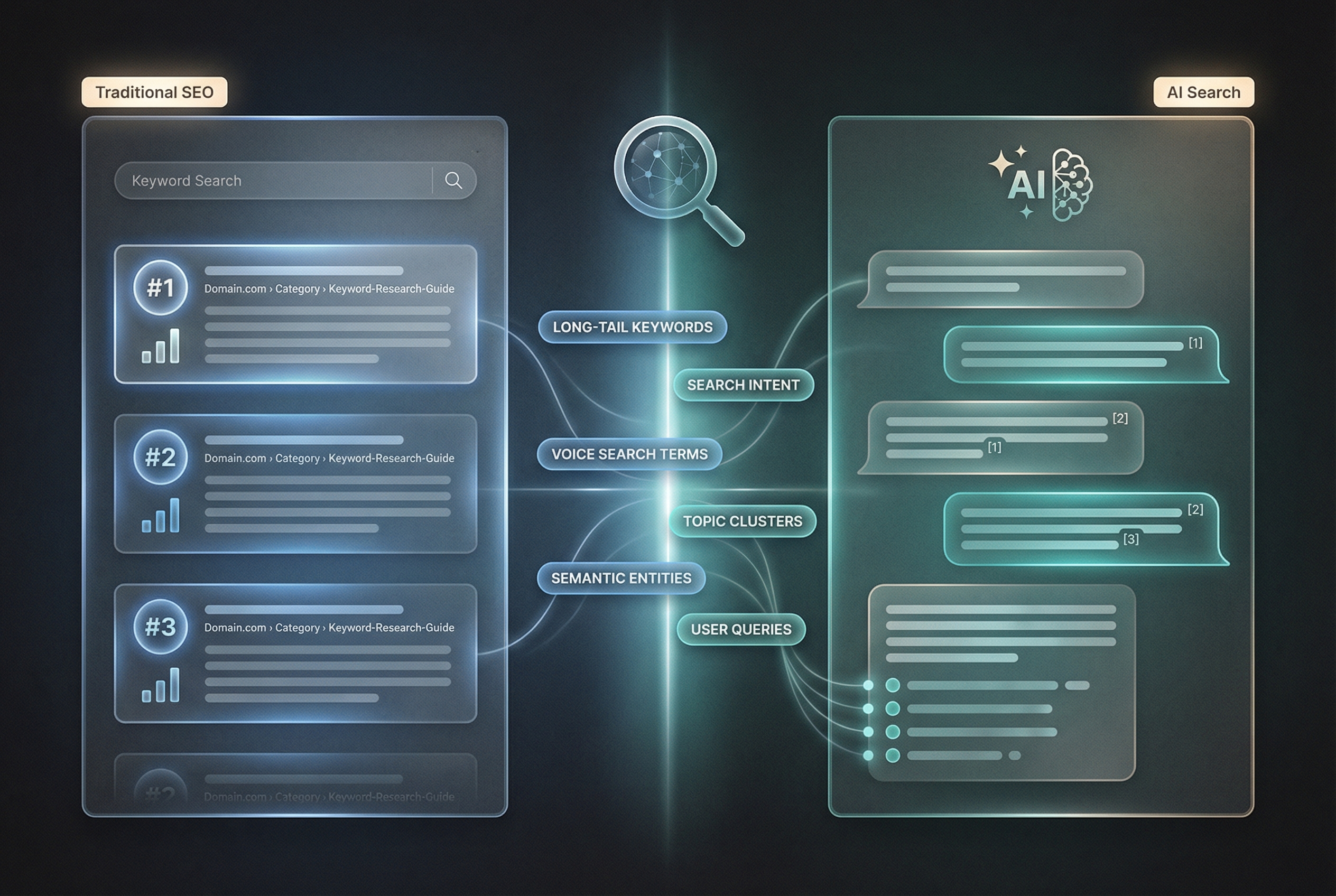
Keyword research remains the foundation of every successful SEO strategy. But the game has expanded. Today, you’re optimizing for both traditional search rankings AND AI citation visibility. The tactics aren’t always the same.
This guide covers both: foundational keyword discovery plus the newer strategies for getting your content cited by AI assistants.
What Is Keyword Research in 2026?
Keyword research is the process of discovering search terms and questions your audience uses to find information, products, or services. In 2026, this extends beyond traditional search engines to include AI assistants like ChatGPT and Perplexity, which cite sources rather than rank pages.
The practice has evolved through three distinct eras:
| Era | Focus | Success Metric |
|---|---|---|
| 2010-2018 | Keywords | Rankings |
| 2018-2024 | Intent + Keywords | Traffic |
| 2024-2026+ | Entities + Intent + Keywords | Citations + Traffic |
The fundamental shift: We’ve moved from matching keywords to understanding concepts. Search engines now interpret entities (people, places, things, concepts) and their relationships, not just keyword strings.
The numbers tell the story:
- 91.8% of all searches are now long-tail keywords (Backlinko)
- 60% of searches result in zero clicks because users get answers directly on the SERP (SparkToro)
- Long-tail keywords convert 2.5x better than head terms because they match specific intent
Effective keyword research in 2026 answers four critical questions:
- What are people searching for in your industry?
- How are they asking AI assistants about your topics?
- How difficult will it be to rank AND get cited?
- Which platform should you optimize for first?
Understanding the Modern Search Ecosystem
Here’s something I explain to every new client: a page can rank #1 on Google but never get cited by ChatGPT, and vice versa. Each search platform evaluates content differently, and your keyword strategy needs to account for where your actual audience searches.
| Platform | Monthly Users | How It Works | What Gets Cited |
|---|---|---|---|
| Google Organic | 8.5B+ | Ranks pages by relevance signals | High-authority, optimized pages |
| Google AI Overviews | 2B+ | Synthesizes from multiple sources | Top-ranked content, schema-rich pages |
| ChatGPT | 800M weekly | Cites from training + web search | Wikipedia, authoritative sources |
| Perplexity | 780M queries | Real-time search synthesis | Reddit, YouTube, fresh content |
The source selection is wildly different across platforms. According to Digital Bloom’s LLM Visibility Report, Wikipedia dominates ChatGPT citations (48%), while Reddit dominates Perplexity (46.5%). If your audience uses Perplexity, forum authority matters more than encyclopedic tone.
What This Means for Keyword Research
- Research must consider multiple discovery channels, not just Google
- Citation potential matters alongside search volume
- Platform-specific content strategies may be needed for maximum visibility
- A page can rank #1 on Google but never get cited by AI, and vice versa
How to Use a Keyword Research Tool
Modern keyword research tools streamline the discovery process by providing data-driven insights into search behavior. Here’s how to get the most from keyword research in 2026:
Traditional SEO Tools
- Enter your seed keyword: Start with broad terms related to your business
- Review the metrics: Analyze search volume, keyword difficulty, CPC, and intent
- Filter by intent: Focus on keywords matching your content goals
- Export and organize: Build prioritized keyword lists for content planning
Tool Categories for Modern Research
| Category | Examples | Best For |
|---|---|---|
| Traditional SEO | Ahrefs, Semrush, Moz | Volume, difficulty, rankings |
| AI Visibility | Profound, Otterly.ai | Citation tracking, AI share of voice |
| Entity Analysis | WordLift, InLinks | Semantic gaps, entity relationships |
| Question Research | AlsoAsked, AnswerThePublic | Conversational queries, PAA |
AI-Specific Research Methods
Beyond traditional tools, modern keyword research requires direct AI platform analysis:
- Query ChatGPT/Perplexity directly with your target questions
- Note which competitors get cited for your topics
- Analyze what makes cited content different (format, structure, authority)
- Use People Also Ask boxes to map the question ecosystem around your keywords
Step-by-Step Keyword Research Guide
Step 1: Brainstorm Seed Keywords + Entity Topics
Start with products, services, and pain points, but add entity mapping to your process.
Traditional brainstorming:
- Your main products or services
- Problems your audience faces
- Solutions you provide
- Industry terminology
Entity mapping:
- What concepts define your expertise?
- What topics should you “own” in your space?
- What related entities connect to your core topics?
Pro tip: Customer conversations are gold. Ask your sales or support team what questions prospects actually ask. These real-world queries reveal valuable keyword opportunities that tools often miss.
Step 2: Expand with Tools + AI Query Analysis
Once you have seeds, expand using both traditional tools AND conversational research.
| Traditional Keyword | Conversational Variations |
|---|---|
| ”CRM software" | "What’s the best CRM for a small team?" |
| "How do I choose a CRM for my startup?" | |
| "Which CRM works without technical setup?” |
ChatGPT prompts tend to be significantly longer than Google searches, with most containing five or more words. Research the full-sentence questions people actually ask AI, not just the short keywords they type into Google.
Research sources for conversational queries:
- People Also Ask boxes
- Reddit discussions
- Customer support tickets
- Quora threads
- Direct AI queries on your topics
Step 3: Analyze Search Intent + AI Response Patterns
Search intent is why someone searches for a term. Understanding intent ensures your content matches what users actually want.
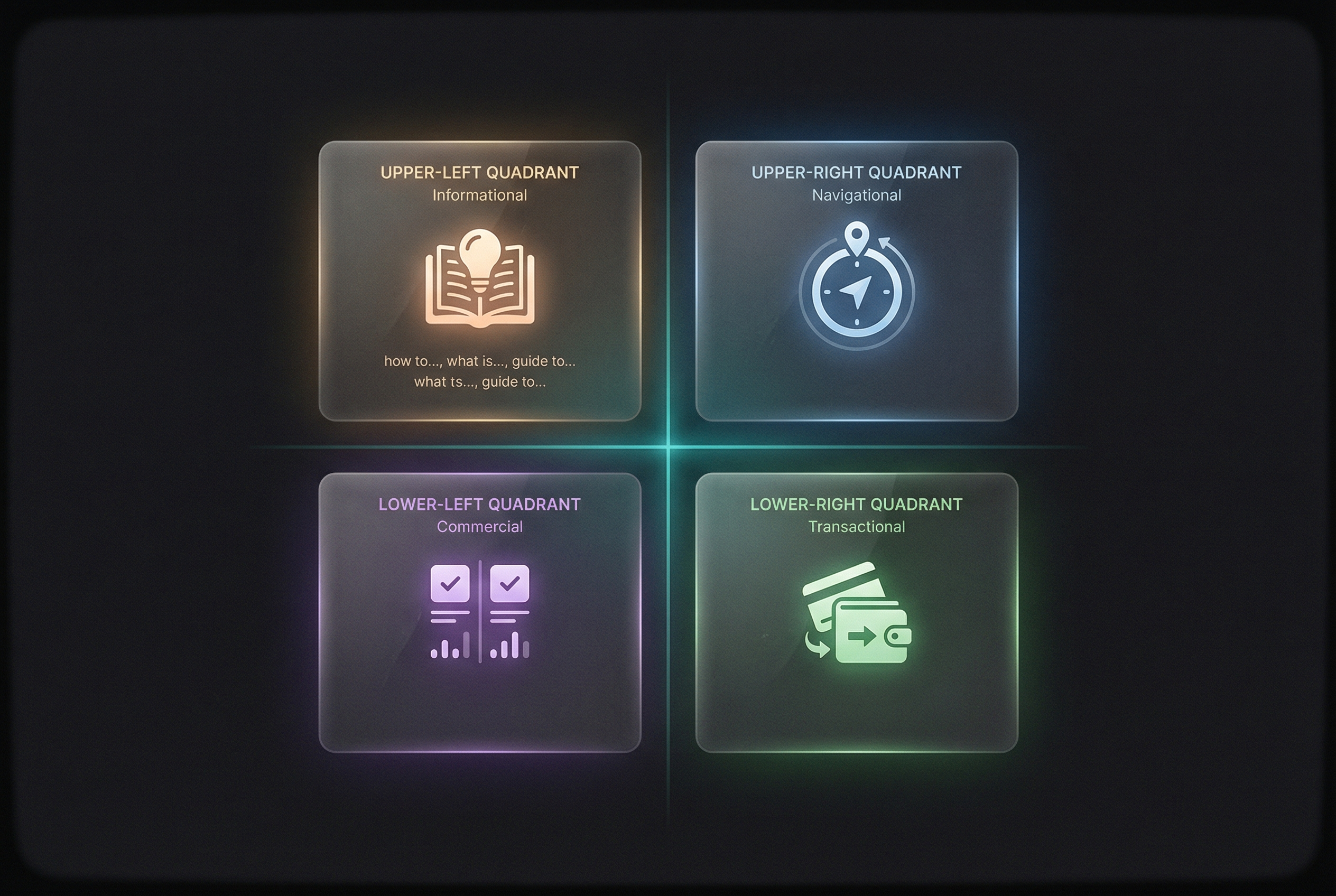
The four traditional types of search intent:
- Informational: User wants to learn (“what is SEO”)
- Navigational: User wants a specific site (“Ahrefs login”)
- Commercial: User is researching before buying (“best SEO tools 2026”)
- Transactional: User wants to purchase (“buy Ahrefs subscription”)
“Answer Intent”:
Some queries seek direct, synthesized answers rather than pages to explore. These are prime targets for AI citation optimization.
Check for each keyword:
- Does this query trigger AI Overviews? What format?
- What type of content does Google show? (Lists, how-tos, definitions)
- How do AI assistants currently answer this question?
Step 4: Evaluate Difficulty + Citation Potential
Keyword difficulty (KD) estimates how hard it will be to rank on page one. Most tools use a 0-100 scale.
Difficulty benchmarks:
| Score | Level | What It Takes |
|---|---|---|
| 0-20 | Easy | New sites can rank with quality content |
| 21-40 | Moderate | Requires some authority and good content |
| 41-60 | Hard | Needs strong backlinks and comprehensive content |
| 61-80 | Very Hard | Dominated by authoritative sites |
| 81-100 | Extremely Hard | Only major brands compete here |
Citation Difficulty (new concept): How established are the sources AI currently cites for this topic? Sometimes low KD keywords have high citation difficulty, and vice versa. A newer topic might have weak AI source coverage, creating an opportunity.
Start with lower-difficulty keywords to build momentum. As your domain authority grows, target progressively harder terms.
Step 5: Prioritize for BOTH Traditional & AI Search
Use a weighted prioritization framework:
| Factor | Weight | Notes |
|---|---|---|
| Search Volume | Medium | Still matters for traditional traffic |
| Keyword Difficulty | High | Can you realistically compete? |
| Commercial Intent | High | Ties to business value |
| Citation Potential | Medium-High | Can your content be AI-cited? |
| Content Format Fit | Medium | Do you have the right format? |
The ideal target: keywords where you can win in traditional search AND establish citation authority with AI platforms.
Step 6: Map Keywords to Content Types + Topic Clusters
A keyword map assigns primary and secondary keywords to specific pages, preventing keyword cannibalization.
Basic structure:
- Homepage: Brand + primary service keywords
- Service pages: Specific service + location keywords
- Pillar pages: Comprehensive topic overview keywords
- Cluster posts: Specific long-tail keywords linking to pillar
- Product pages: Product-specific + commercial keywords
Topic cluster architecture: Organize keywords into clusters with one pillar page and multiple supporting cluster pages. This demonstrates topical authority, which is a major ranking factor for both Google and AI citation systems.
GEO: Keyword Research for AI Search Engines

AI search engines don’t rank pages. They cite sources. Optimizing for AI visibility requires understanding what makes content citation-worthy: clear structure, authoritative presentation, and direct answers to user questions.
GEO Principles for Keyword Selection
Generative Engine Optimization (GEO) focuses on getting your content cited by AI systems. When selecting keywords with GEO in mind:
- Focus on question-based queries because this mirrors how users actually prompt AI
- Consider conversational length since AI queries average 10-11 words vs. 2-3 for typed search
- Evaluate whether you can create comprehensive, citable content because AI cites depth, not keyword matches
Question-Based Queries That Get Cited
Certain query formats have higher citation potential:
- Direct questions: “What is…”, “How do I…”, “Which is best…”
- Comparison queries: “X vs Y”, “Best X for Y”
- Implementation queries: “How to set up…”, “Step-by-step…”
- Definition queries: “What does X mean?”
These formats signal clear user intent that AI can match with authoritative answers.
Conversational Keyword Optimization
Research full-sentence query variations, not just keywords:
Sources for conversational queries:
- Customer service transcripts
- Reddit threads in your niche
- Quora questions
- People Also Ask boxes
- Direct prompts to ChatGPT/Perplexity
Then create content that answers exactly as AI would present it: clear, structured, and complete.
Entity Optimization Basics
Search engines increasingly understand entities (people, places, things, concepts) rather than just keywords.
- Identify core entities in your topic area
- Demonstrate relationships between entities in your content
- Use schema markup to make entities machine-readable
- Build consistent entity representation across all your content
AEO: Answer Engine Optimization Keywords
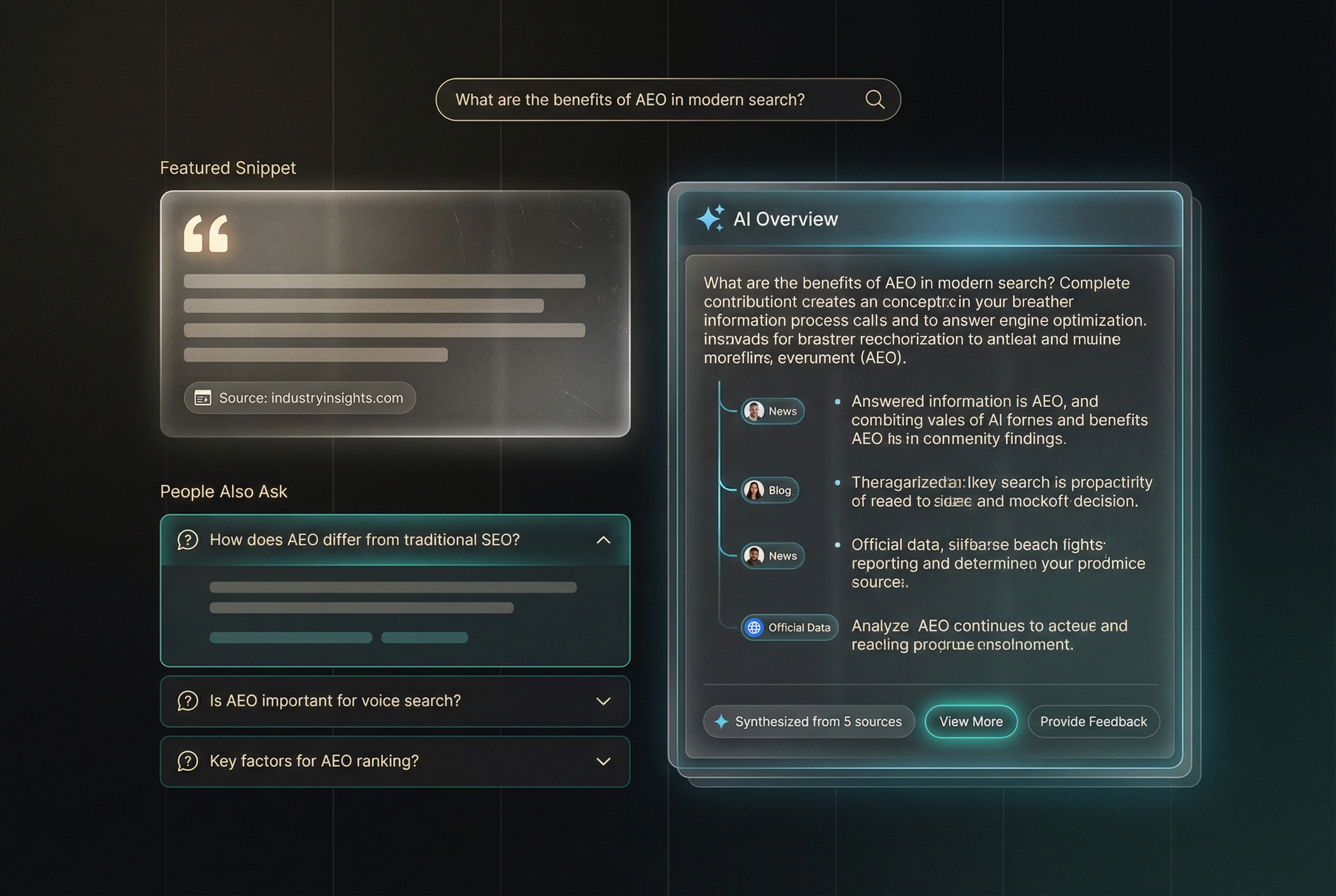
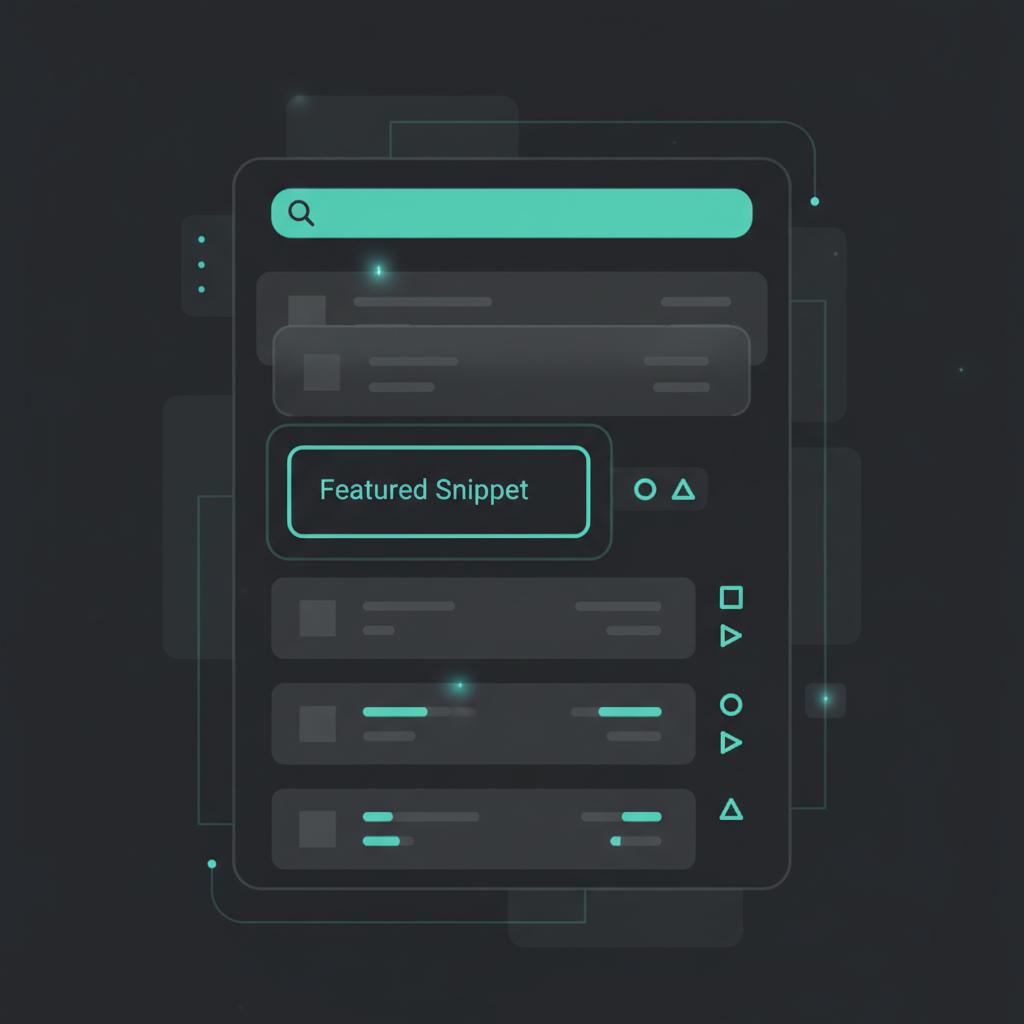
Answer Engine Optimization targets SERP features where AI synthesizes information: featured snippets, People Also Ask boxes, and AI Overviews.
Featured Snippet Targeting
Featured snippets dropped 64% in 2025 according to Keywords Everywhere, but they still matter. Google often chooses between showing a featured snippet OR an AI Overview (rarely both).
When snippets still appear:
- Simple, factual queries
- Quick definitions
- Single-answer questions
Snippet optimization:
- 40-60 word direct answers
- Clear question-answer format
- Lists and tables where appropriate
Key insight: Optimizing for featured snippets = optimizing for AI citation potential. The same formats work for both.
AI Overview Optimization
According to Semrush’s AI Overviews study, AI Overviews now appear in over 50% of Google searches and continue to expand. Here’s what drives citation:
| Factor | Impact | Action |
|---|---|---|
| Organic ranking | 75% from top 12 results (Semrush) | Traditional SEO still foundational |
| Schema markup | Significantly higher citation rates | Implement FAQ, HowTo, Article schema |
| Content freshness | AI prefers recently updated content | Update regularly |
| Answer-first format | Higher extraction rate | Lead sections with direct answers |
Direct Answer Query Formats
Target keywords with these high-citation formats:
- Definition queries: “What is [concept]?”
- Process queries: “How to [action]?”
- Comparison queries: “[X] vs [Y]”
- List queries: “Best [category] for [use case]”
- Explanation queries: “Why does [phenomenon] happen?”
Content Structure for AI Citation
Format your content for maximum AI extractability:
- Answer-first formatting: Place direct answers (40-60 words) immediately under each heading
- Question-based H2/H3 headings: Match how users phrase queries
- Tables and lists: Highly extractable data formats
- Statistics with sources: AI systems cite content with verifiable data
- Expert quotes: Named sources increase credibility and citation likelihood
Advanced Keyword Research Strategies
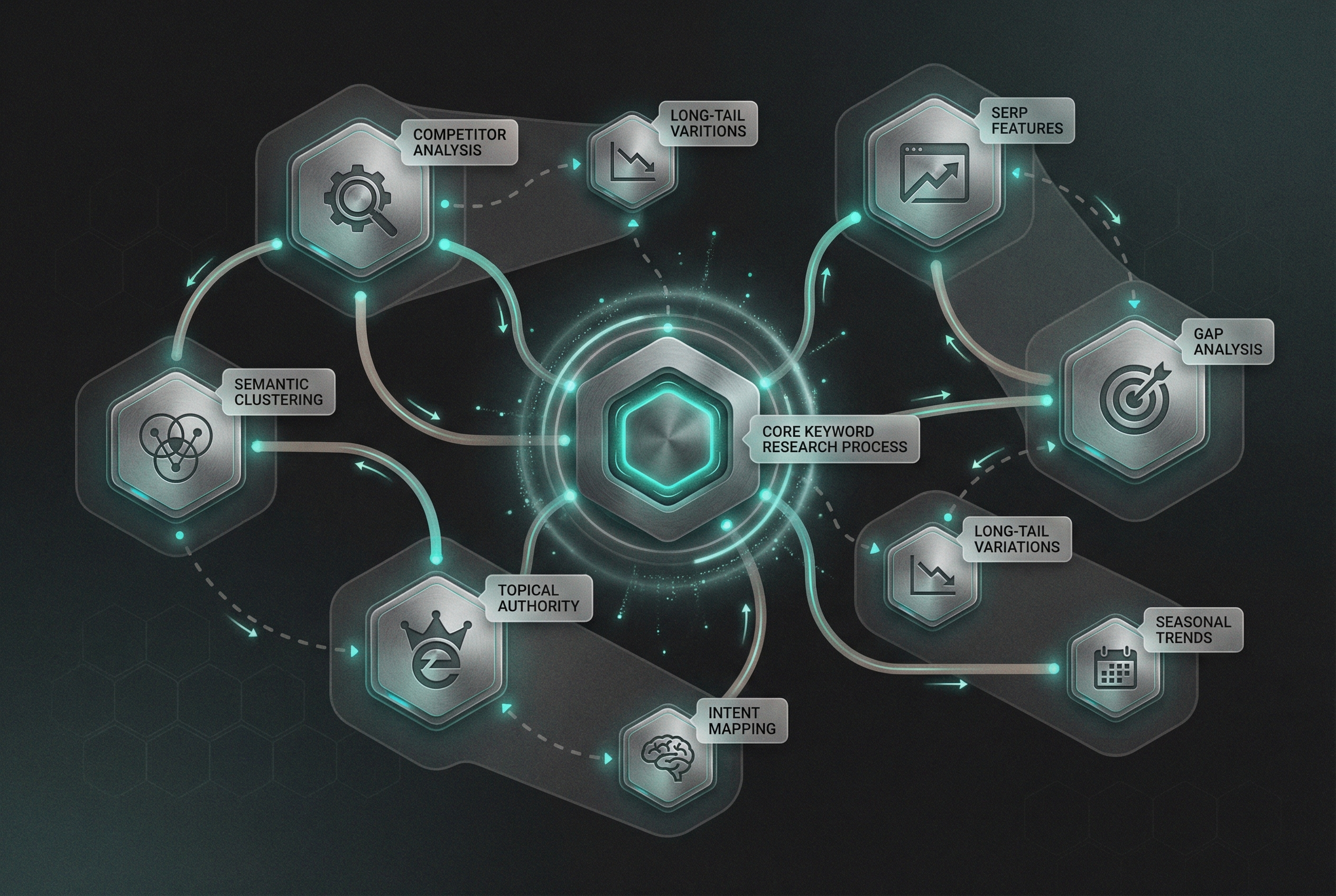
Competitor Gap Analysis (Traditional + AI Visibility)
Traditional gap analysis:
- Identify 3-5 direct competitors
- Use tools to extract their ranking keywords
- Filter for keywords you don’t rank for
- Prioritize by volume and difficulty
- Create content to fill the gaps
AI visibility gap analysis:
- Query ChatGPT/Perplexity with target topics
- Note which competitors get cited
- Analyze what makes their content citation-worthy
- Create superior content with better structure and depth
Semantic + Entity Clustering
Group keywords by meaning, not just similarity:
- Semantic clustering: Keywords with same user intent, different phrasing
- Entity clustering: Keywords connected by topic relationships
- Topic clusters: Pillar + cluster page architecture
Build internal linking that expresses entity relationships. This signals topical authority to both search engines and AI systems.
Topical Authority Building
AI systems increasingly cite sources that demonstrate comprehensive expertise:
- Comprehensive coverage beats scattered keyword targeting
- Demonstrate expertise across the full topic ecosystem
- Consistent entity representation across all content
- Regular updates show ongoing authority
SERP Feature + AI Overview Targeting
- Identify which keywords trigger which features (snippets, PAA, AI Overviews)
- Optimize content format for the target feature type
- Monitor feature appearance rates for your target terms
- Adjust strategy as feature distribution evolves
Best Practices for 2026
Foundational Practices (Still Essential)
- Research before you write. Never create content without keyword data.
- Prioritize intent over volume. Right traffic beats more traffic.
- Balance head terms and long-tails. Build a diverse keyword portfolio.
- Document everything. Maintain a master keyword spreadsheet.
- Track rankings. Monitor progress and adjust strategy.
- Update research regularly. Search behavior evolves.
New Best Practices for the AI Era
| Practice | Why It Matters in 2026 |
|---|---|
| Research AI visibility alongside keywords | Citation = new traffic source |
| Update content regularly | AI favors freshness (especially Perplexity) |
| Implement schema markup | 30-40% higher AI citation rates |
| Build topical authority | AI cites comprehensive, expert sources |
| Optimize for conversational queries | 80% of voice/AI searches are conversational |
| Track citations, not just rankings | Share of voice in AI matters |
Common Mistakes in the AI Era
Classic Mistakes (Still Costly)
- Targeting only high-volume keywords. You’ll struggle against established competitors.
- Ignoring search intent. Ranking means nothing if users bounce immediately.
- Keyword stuffing. This hurts rankings and readability.
- Not considering difficulty. Targeting impossible keywords wastes resources.
- One-time research. SEO requires ongoing keyword discovery.
AI-Era Mistakes to Avoid
| Mistake | Why It’s a Problem |
|---|---|
| Ignoring AI search entirely | Missing fastest-growing discovery channel |
| Over-relying on search volume | Low-volume conversational queries may have high citation potential |
| Not updating content | AI systems favor fresh content, especially Perplexity |
| Missing schema markup | Leaving citation potential on the table |
| Optimizing for Google only | ChatGPT/Perplexity cite different sources |
| Ignoring E-E-A-T signals | AI uses trust as a binary filter |
Frequently Asked Questions
How often should I do keyword research?
In my experience, the best approach is quarterly deep-dives combined with ongoing monitoring. Set up alerts for your key topics and check monthly which competitors are gaining citation visibility. The AI citation landscape shifts faster than traditional rankings. I’ve seen clients lose ground within weeks when a competitor publishes better-structured content.
What is a good keyword difficulty score?
A good score depends on your website’s authority. New sites (DA under 30) should target keywords with difficulty under 30. Established sites can aim for 40-60. Only authoritative sites should regularly target 70+ difficulty keywords. Also consider citation difficulty, because some low-KD topics have established AI sources that are hard to displace.
How many keywords should I target per page?
Focus on one primary keyword per page, supported by 3-5 semantically related secondary keywords. For AI visibility, ensure your content also addresses the conversational question variations around your primary keyword.
Are long-tail keywords worth targeting?
This is one thing I’m emphatic about: yes. Long-tail keywords convert 2-3x better than head terms because they capture specific intent. A visitor searching “best CRM for real estate teams under 10 people” knows exactly what they want. These queries are also easier to rank for AND frequently trigger AI Overviews, giving you visibility on both fronts.
How do I find keywords my competitors rank for?
Use competitive analysis tools like Ahrefs, Semrush, or Moz to enter a competitor’s domain and view their ranking keywords. For AI visibility, query ChatGPT and Perplexity with topics in your space and note which competitors get cited.
What’s the difference between search volume and keyword difficulty?
Search volume indicates monthly searches. Keyword difficulty estimates how hard it is to rank on page one. High volume with low difficulty is ideal but rare. In 2026, also consider citation potential. Some keywords drive more AI visibility than their volume suggests.
Should I target branded keywords?
Yes, strategically. Ensure you rank for your own brand terms. For AI search, make sure your brand appears in your content’s answer capsules so it gets cited when AI discusses your topics.
How do I do keyword research for ChatGPT and Perplexity?
Start by querying these platforms directly with your target topics. Note which sources get cited and what makes their content different. Focus on comprehensive, question-answering content with clear structure and authoritative presentation. Use question-based research tools like AlsoAsked to map conversational query variations.
What’s the difference between ranking and getting cited?
Rankings determine where you appear in a search results list. Users must click to visit. Citations occur when AI systems reference your content directly in their generated answers. You can be cited without ranking #1, and you can rank #1 without being cited. Both matter for modern visibility.
Should I still focus on traditional SEO keywords?
Yes. Traditional SEO remains foundational. 75% of AI Overview citations come from top-ranking pages. However, supplement traditional keyword research with AI-specific strategies: question-based queries, conversational variations, and schema markup optimization.
Start Driving Traffic in the AI Era
Keyword research in 2026 requires a dual approach: strong traditional SEO foundation plus AI citation optimization. The fundamentals haven’t changed. You still need to understand what your audience searches for, match content to intent, and target achievable opportunities.
But the playing field has expanded. AI search engines that cite rather than rank are now a major discovery channel. The winners will be those who optimize for both.
Your next steps:
- Pick your top 5 pages and query ChatGPT with their target topics. See if you’re getting cited.
- Add “People Also Ask” research to your process. These are the conversational queries that trigger AI.
- Implement FAQ schema on your best content. It takes about 15 minutes per page.
- Set up a monthly check: are competitors gaining ground in AI citations?
- Choose one topic cluster to own completely. Depth beats breadth for AI visibility.
Ready for weekly SEO insights? Subscribe to my newsletter for actionable keyword research tips and AI search strategies delivered every Tuesday.